Appendix III - Controlling Note Timing

Time Parameters
Before reading this, ensure you are familiar with how ARP’s Time parameters work. Read this first: Arp Parameters - Time
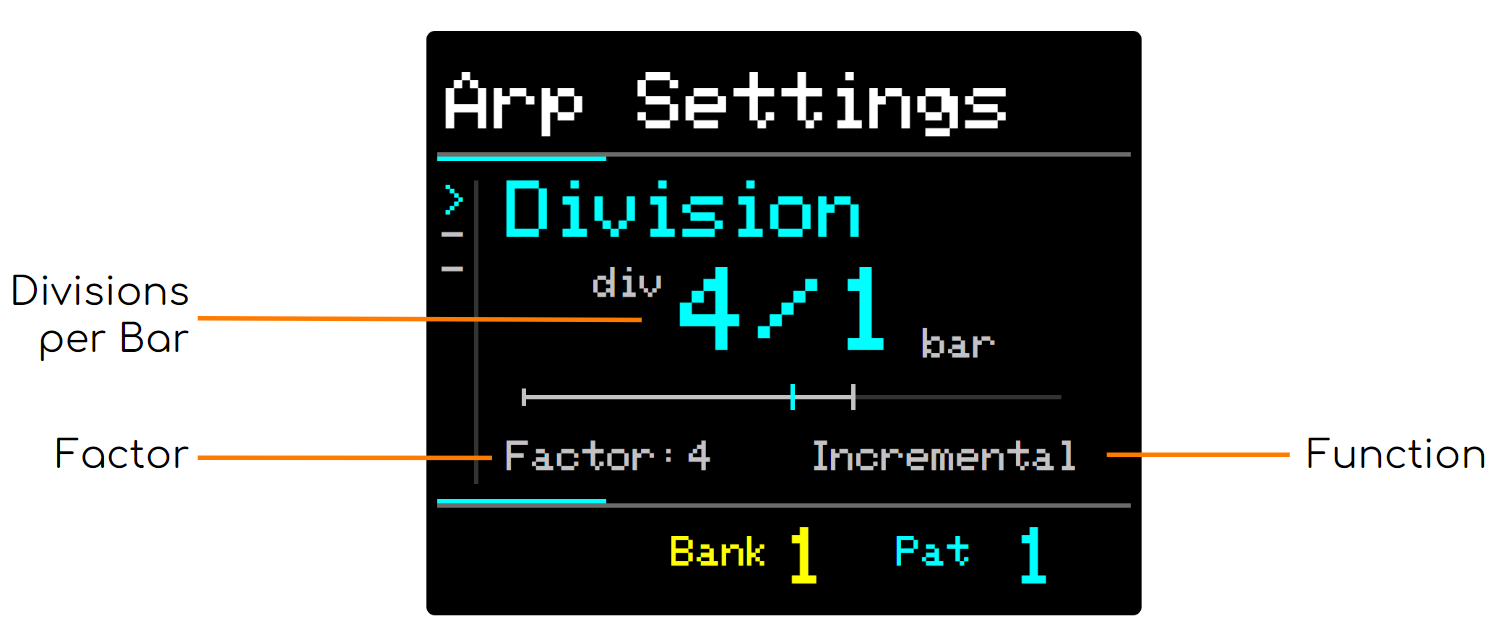
MIDI Bar and Resolution
ARP supports high-resolution bar division, enabling more accurate note timing when playing unusual factors, e.g. 5, 7, 9, 10 and so on.
The Time Factor parameter can be set to any integer value between 1 and 16.
Using the Division parameter, to increase or decrease the division, allows for timing sub-divisions between 1 step every 8 bars and 32 steps every bar and, of course, any variation in between those limits.
Want 7 notes spread evenly over 23 bars? ARP can do that!

A Fresh Approach
So why not use a conventional approach? Why not just have a parameter to set the time signature?
-
Not everyone knows or wants to learn music theory
-
Allowing unusual time divisions enables unlimited new musical exploration
The combination of Factor and Function allows you to quickly change the timing of sequences during a performance and keep it to the rhythm of the track.
For example… jumping from 8/1 to 4/1 via 7/1, 6/1, & 5/1 would result in notes being played at undesired times and would potentially ruin a performance.
ARP allows you to halve, double or divide exactly, keeping everything in sync. While still enabling you to go timing crazy if you want to.

Delay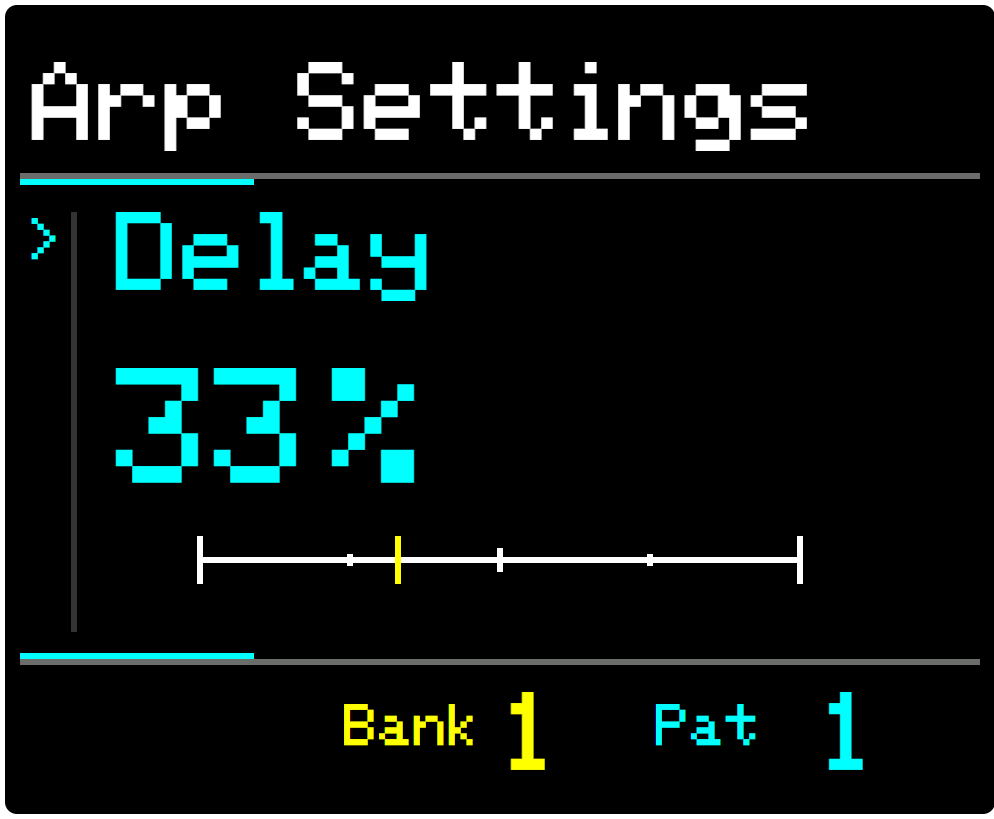 

The Delay parameter adds a timing offset to all notes in the sequence, effectively shifting the sequence forward in time.
The value is the percentage distance to the next step in the sequence.
Example:
Given a Division of 4/1, a Delay value of 50% will push all notes forward by half the distance to the next note. i.e. an 8th note interval.
Groove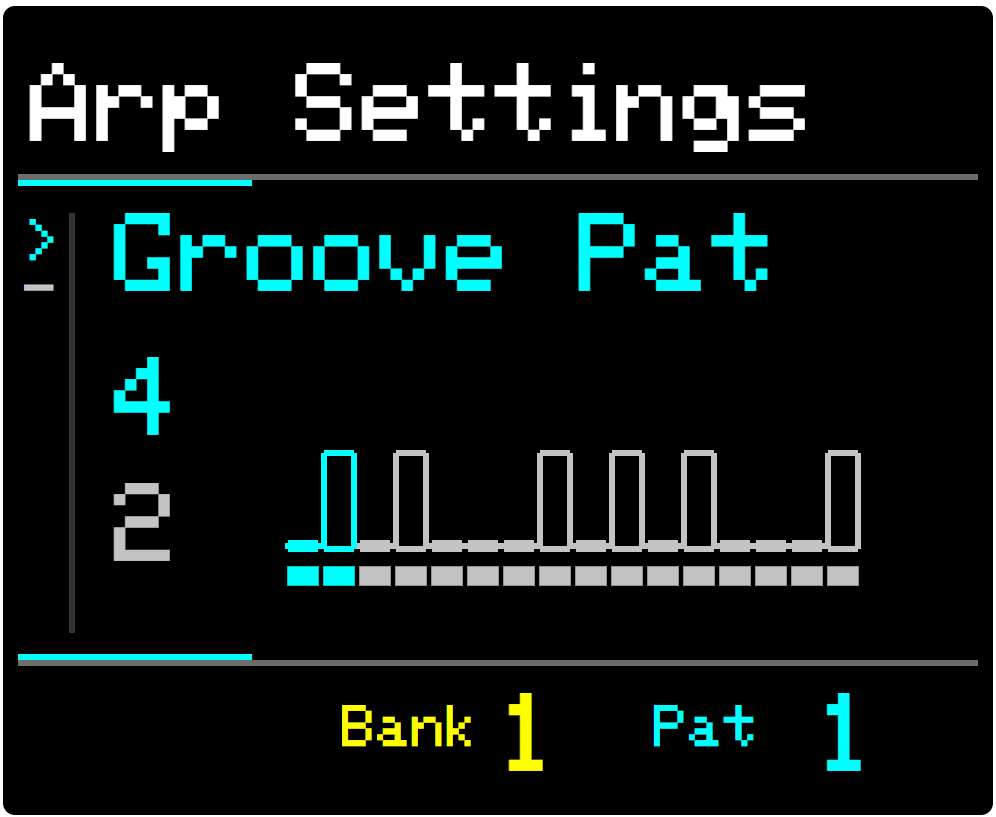 

The Groove parameters affect the timing of individual notes in the sequence. (Similar to Delay, but per note).
You can achieve swing or highly complex timing patterns.
-
Groove Pattern selects the pattern for the sequence. (You can create custom patterns by pressing Program).
-
Groove Length sets how many steps of the pattern are played before it repeats. You can even create polyrhythms within the note-timing patterns.
Individual step timings are a percentage of the distance to the next step.

Modulation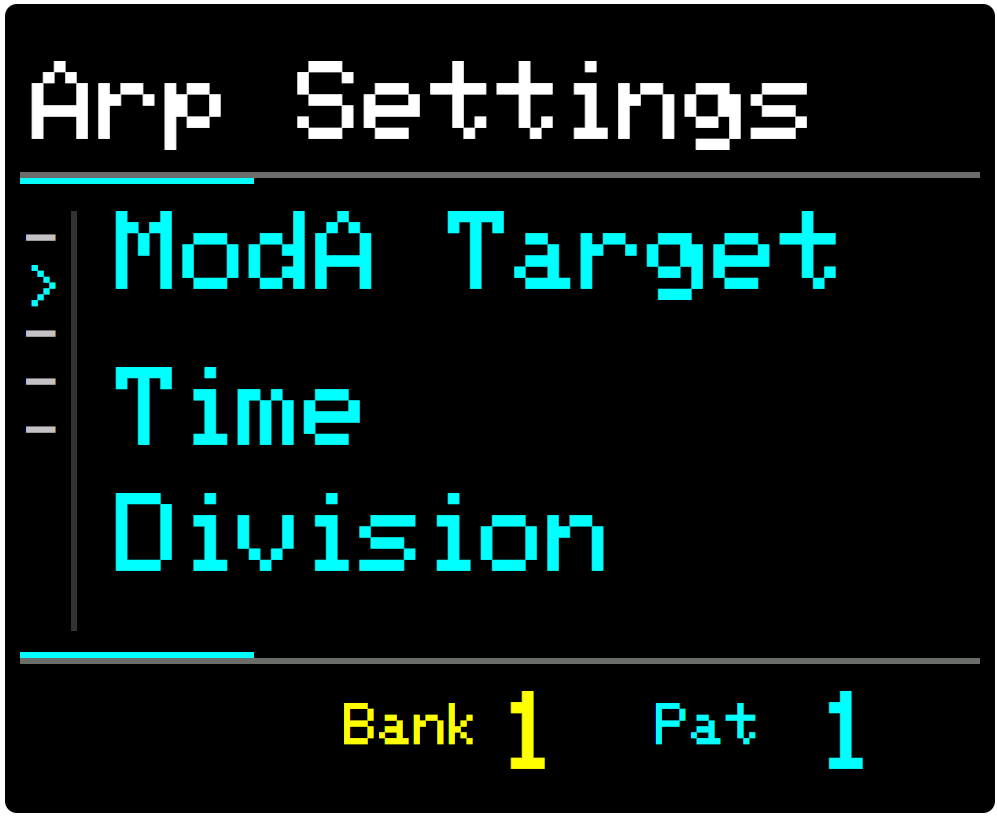 

ARP enables you to apply modulation to almost any parameter and timing is no exception.
Targeting Time Division, Delay or Groove Length allows enormous scope for both conventional and unusual rhythmic patterns to be achieved and can be used to evolve sequence rhythms over time.
It's all deterministic, though, so ARP will always return to the original sequence when switching off the modulation.